Aldo Fabbrizi (1905-1990)
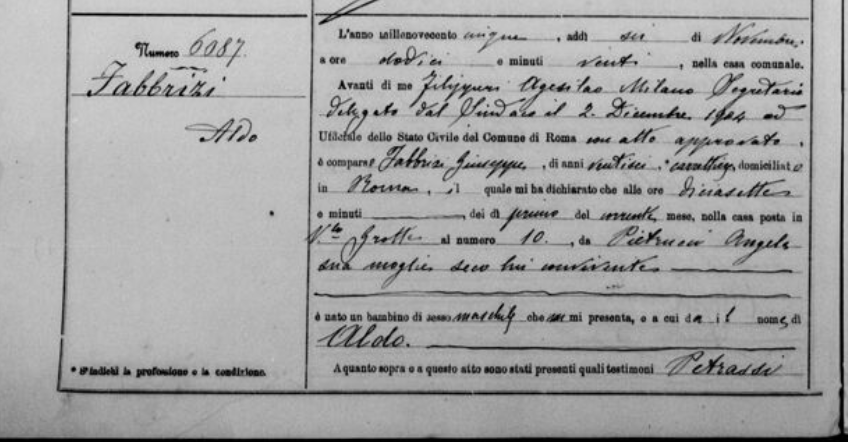
Aldo Fabrizi (born Fabbrizi) was born in Rome on November 1, 1905, to Giuseppe, a coachman, and Angela Petrucci, a fruit seller in Campo de’ Fiori.
Having been orphaned by his father at an early age, he abandoned his studies to help support his family, consisting of his mother and five sisters, including the well-known “sora Lella” (Elena Fabrizi).
Despite this, he published a first collection of poems in 1928, Lucciche ar sole. Romanesque poems, and at the same time began to frequent the theatrical environment with continuity, first playing small roles in the Filodrammatica Tata Giovanni, then as a macchiettista on the stages of numerous Italian stages, until 1937, when he inaugurated his own company.
His film debut dates back to 1942 with Avanti c’è posto…, flanked by Anna Magnani under the direction of Mario Bonnard.
He soon became a stable presence on the big screen, even winning the Silver Ribbon for Best Actor in a Leading Role in the film First Communion in 1950.
More than 70 films followed, including Roberto Rossellini’s Roma città aperta (1945) and numerous others in collaboration with his colleague and friend Totò-among the best-known: Guardie e ladri (1951), I tartassati (1959), Totò, Fabrizi e i giovani d’oggi (1960), Totò contro i quattro (1963)-and others with Peppino De Filippo-Lordori, in carrozza! (1951), Accadde al penitenziario (1955) and Guardia, guardia scelta, brigadiere e maresciallo (1956) -.
Fabrizi thus became one of the central figures of Italian-style comedy, giving life to recurring and characteristic characters inspired by popular Rome, such as the burly, jovial and grumpy man who wore the clothes of the petty bourgeois or the uniform of a non-commissioned officer, very dear to Italian audiences.
After a brief stint as a director, his presence on the big screen became more sparse between the 1960s and 1970s. However, he returned in prominent roles in Luigi Magni’s La Tosca (1973) and especially in Ettore Scola’s C’eravamo tanto amati (1974), with a performance that earned him his second Nastro d’Argento, this time as a supporting actor.
In the last decade of his life, he continued to participate in theater and television productions and, in 1988, received the David di Donatello Lifetime Achievement Award.
He died in Rome on April 2, 1990.
You can consult the birth certificate on the Ancestors Portal: Archivio di Stato di Roma > Stato civile italiano > Roma > 1905
The original is kept at the State Archives in Rome.
For more on the figure of Aldo Fabrizi, see the entry of the Dizionario Biografico degli Italiani edited by Sisto Sallusti.