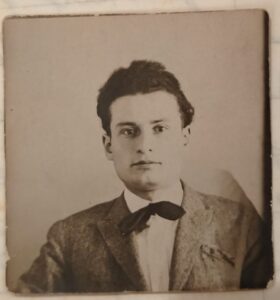
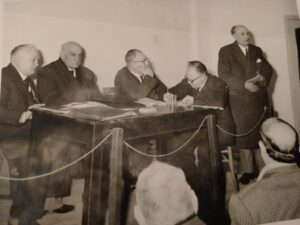
Curzio Malaparte, stage name Curt Erich Suckert, was born in Prato on June 9th 1898, to Erwin, a dyer of Saxon origin, and Eugenia Perelli.
Even as a child he showed a restless nature, which led him to develop a turbulent personality, tending to be in opposition, in malaparte, as he himself wished to emphasise with the name he took as an emblem of ‘a controversial and radically polemical identity’.
Prato was the city where his first intellectual training took place and where he began his literary activity, which declined at various levels and in various spheres, including – and in a very productive manner – journalism.
He fought in both World Wars. He also became an officer, but without detaching himself from his literary vocation. Rather, the experience of the war became a crucial event, which greatly influenced his person, fostering his approach – intellectual and active – to politics.
Talented and enterprising, he had a prolific and bilingual pen (he wrote, in fact, in both Italian and French): among his most famous essays are Viva Caporetto! (1921) and Italia barbara (1925), while his novels include Kaputt (1944) and La pelle (1949).
His multifaceted and articulate figure allowed him to read reality at a deep and complex level, making him one of the most emblematic characters of the 20th century.
He died in Rome on July 19th 1957.
You can consult the birth certificate on the Ancestors Portal: Archivio di Stato di Prato > Stato civile italiano > Prato > 1898
Note the note in the margin, written in pencil, stating that the name change from Curt Erich Suckert to Curzio Malaparte was approved by royal decree on April 15th 1937.
For more on the figure of Curzio Malaparte, see the entry in the Dizionario Biografico degli Italiani edited by Marino Biondi.
Archivio di Stato di Prato > Stato civile italiano > Prato > 1898
Francesco Saverio De Sanctis was one of the most important literary critics of the 19th century.
Born in Morra Irpina (today Morra De Sanctis), in the province of Avellino, on March 28th 1817, as a child he was instilled with a keen interest in language and literature.
Over the years, thanks also to his early start in teaching and numerous exchanges with many of the most culturally prominent personalities of the time, he became one of the most celebrated authors and essayists of his time.
He was the first Minister of Education of the Kingdom of Italy, from 1861 to 1862.
He died in Naples on December 29th 1883.
You can consult the birth certificate on the Ancestors Portal: Archivio di Stato di Avellino > Stato civile della restaurazione > Morra (today Morra De Sanctis) > 1817
For more on the figure of Francesco De Sanctis, see the entry in the Dizionario Biografico degli Italiani edited by Attilio Marinari.
Archivio di Stato di Avellino > Stato civile della restaurazione > Morra (today Morra De Sanctis) > 1817
“Sora Lella”, whose real name is Elena Fabbrizi, was an Italian actress, a symbol of genuine, straightforward, typically Roman comedy. She was born in Rome on June 17th 1915.
Before her film career, she devoted herself to working as a restaurateur, and only around the age of forty did she take her first steps into the world of the silver screen, following in the footsteps of her brother Aldo, acting with big names such as Totò, Vittorio Gassman, Marcello Mastroianni, Mario Monicelli and others.
The real success, however, came around the 1980s, when it was strongly desired by Carlo Verdone in several of his films. Under her direction, she won a Silver Ribbon as ‘Best Newcomer Actress’ in 1981, for the film Bianco, rosso e verdone, and, in 1984, also the David di Donatello as ‘Best Supporting Actress’ for the film Acqua e Sapone.
She died in Rome on August 9th 1993.
You can consult the birth certificate on the Ancestors Portal: Archivio di Stato di Roma > Stato civile italiano > Roma > 1915
Archivio di Stato di Roma > Stato civile italiano > Roma > 1915
Giovanni Gentile, born in Castelvetrano (TR) on May 29th 1875, was a prominent figure in the cultural and political scene of the first half of the 20th century.
A philosopher and pedagogue, as well as for his numerous exchanges and debates with Benedetto Croce and other exponents of the erudite circles of the time, he is remembered for being one of the co-founders, together with Giovanni Treccani, of the Istituto dell’Enciclopedia Italiana, approved as an institution of national purpose by Royal Decree Law no. 669 (for more details and to consult the Royal Decree: Archivio Centrale dello Stato, Raccolta ufficiale delle leggi e dei decreti (1861 – 2012), R.D.L. 24 giugno 1933 no. 669).
Gentile was also appointed Minister of Education in 1920-21 and during this term was the architect of the school reform that bears his name.
On May 9th 1901, he was united in marriage with Erminia Nudi from Campobasso.
He died in Florence on April 15th 1944.
You can consult the birth certificate on the Ancestors Portal: Archivio di Stato di Trapani > Stato civile italiano > Castelvetrano > Nati > 1875
For more on the figure of Giovanni Gentile, see the entry in the Dizionario Biografico degli Italiani edited by Gennaro Sasso.
Archivio di Stato di Trapani > Stato civile italiano > Castelvetrano > Nati > 1875
Biase Martorella
Mi chiamo Gisela Astrid e sono brasiliana, ma nel mio sangue scorre un forte legame con l’Italia. Il mio trisavolo, infatti, si chiamava Biase Martorella e nacque il 5 luglio 1859 a Lagonegro, in provincia di Potenza (Basilicata), da Salvatore e Maria Carrano, che risiedevano in via Castello, a circa 200 metri di distanza dalla cattedrale intitolata a San Nicola di Bari.
Non conosco esattamente quando Biase sia immigrato in Brasile, ma so che al suo arrivo il suo nome divenne “Braz Martorelli” e che, da quel momento, tutti i suoi discendenti ereditarono il cognome “Martorelli” invece di “Martorella”.
Biase presumibilmente partì per il Brasile attorno al 1882, anno in cui sposò la mia trisnonna, Maria Filomena Colombo, che, pur essendo nata in Brasile, nella città di Bonito (Pernambuco), il 29 settembre 1869, anche lei era figlia di immigrati italiani.
Grazie al portale Antenati, ho avuto modo di ricostruire alcuni avvenimenti della loro storia: il padre di Maria Filomena Colombo, si chiamava Domenico e nacque intorno al 1823, probabilmente nella frazione di Battaglia del Casaletto Spartano, in provincia di Salerno; mentre sua moglie, Filomena Isabella Amato, nacque il 23 dicembre 1837 a Sapri, dove il 21 aprile 1857 si unirono in matrimonio. Qualche anno dopo, precisamente nel 1868, Domenico e Filomena si trasferirono in Brasile, divenendo “Domingos Colombo” e “Filomena Amado”. Lì diedero alla luce alcuni dei loro figli, tra cui la mia trisavola, Maria Filomena.
Biase Martorella e Maria Filomena Colombo si sposarono il 30 novembre 1882, nella città di Bonito, quando lei aveva solo 13 anni. Da questo matrimonio nacquero numerosi figli: Salvador (nato nel 1885), Domenico Astrogildo (nato nel 1887 a Sapri), Audiphas Sofonias (nato nel 1891), Maria Florina (la mia bisnonna, nata nel 1893), Josepha (nata nel 1895), Humberto (nato nel 1898), Filomena (nata nel 1900), Julia Helena (nata nel 1902), Alberto (nato nel 1905) e Audifas (nato nel 1908).
Restauro di foto di Maria Filomena Colombo, moglie di Biase Martorella
La mia trisavola, Maria Filomena, morì all’età di 40 anni, il 5 agosto 1911 in Brasile. È stato interessante scoprire che, sebbene sia nata e si sia sposata a Bonito, lei e Biase abbiano vissuto per alcuni anni a Sapri, il comune natale dei genitori di Maria Filomena, dove diedero anche alla luce un figlio.
Tuttavia, in un certo momento, decisero di tornare in Brasile. Dopo la morte di Maria Filomena, Biase si risposò il 28 maggio 1917 con Maria Barbosa, nata a Monteiro (Paraiba, Brasile) il 22 luglio 1888. Da questo matrimonio nacquero: Zullina (nata nel 1916), Helena (nata nel 1917), Adalberto (nato nel 1917), Maria do Carmo (nata nel 1920), Eunice (nata nel 1922), Jaime (nato nel 1923) e Nivaldo (nato nel 1924).
Biase morì il 19 luglio 1938 a Recife (Pernambuco), all’età di 79 anni. Lì fu sepolto nel cimitero di Santo Amaro. Oltre ai figli, lasciò un’enorme eredità di discendenti, basti pensare che la mia bisnonna, Maria Florina, sua figlia, sia morta lasciando a sua volta 17 figli. La maggior parte della mia discendenza italiana è costituita da commercianti: ad esempio, stando all’atto di nascita di Biase e all’atto di matrimonio dei suoi genitori, suo padre Salvatore era “ramaio”. Tuttavia, Biase era comunemente chiamato “Capitano”, poiché, a quanto pare, era un capitano della Guardia Nazionale dello Stato di Pernambuco.
Sono una pronipote di Biase, mia nonna paterna si chiamava Maria Astrid, sebbene fosse brasiliana, era di origine italiana. Maria Astrid è stata l’unica nonna che non ho avuto modo di conoscere, perché morì prima che io nascessi. Tuttavia, ho sempre sentito un forte legame, anche perché il mio secondo nome è ovviamente dedicato a lei.
Biase Martorella e Maria Filomena Colombo si sposarono il 30 novembre 1882, nella città di Bonito, quando lei aveva solo 13 anni.
Da questo matrimonio nacquero numerosi figli: Salvador (nato nel 1885), Domenico Astrogildo (nato nel 1887 a Sapri), Audiphas Sofonias (nato nel 1891), Maria Florina (la mia bisnonna, nata nel 1893), Josepha (nata nel 1895), Humberto (nato nel 1898), Filomena (nata nel 1900), Julia Helena (nata nel 1902), Alberto (nato nel 1905) e Audifas (nato nel 1908).
La mia trisavola, Maria Filomena, morì all’età di 40 anni, il 5 agosto 1911 in Brasile.
È stato interessante scoprire che, sebbene sia nata e si sia sposata a Bonito, lei e Biase abbiano vissuto per alcuni anni a Sapri, il comune natale dei genitori di Maria Filomena, dove diedero anche alla luce un figlio.
Tuttavia, in un certo momento, decisero di tornare in Brasile.
Dopo la morte di Maria Filomena, Biase si risposò il 28 maggio 1917 con Maria Barbosa, nata a Monteiro (Paraiba, Brasile) il 22 luglio 1888.
Da questo matrimonio nacquero: Zullina (nata nel 1916), Helena (nata nel 1917), Adalberto (nato nel 1917), Maria do Carmo (nata nel 1920), Eunice (nata nel 1922), Jaime (nato nel 1923) e Nivaldo (nato nel 1924).
Biase morì il 19 luglio 1938 a Recife (Pernambuco), all’età di 79 anni. Lì fu sepolto nel cimitero di Santo Amaro. Oltre ai figli, lasciò un’enorme eredità di discendenti, basti pensare che la mia bisnonna, Maria Florina, sua figlia, sia morta lasciando a sua volta 17 figli.
La maggior parte della mia discendenza italiana è costituita da commercianti: ad esempio, stando all’atto di nascita di Biase e all’atto di matrimonio dei suoi genitori, suo padre Salvatore era “ramaio”. Tuttavia, Biase era comunemente chiamato “Capitano”, poiché, a quanto pare, era un capitano della Guardia Nazionale dello Stato di Pernambuco.
Sono una pronipote di Biase, mia nonna paterna si chiamava Maria Astrid, sebbene fosse brasiliana, era di origine italiana. Maria Astrid è stata l’unica nonna che non ho avuto modo di conoscere, perché morì prima che io nascessi. Tuttavia, ho sempre sentito un forte legame, anche perché il mio secondo nome è ovviamente dedicato a lei.
La riscoperta di queste origini italiane è stata per me molto importante: ogni volta che acquisisco nuove informazioni sui miei antenati, mi sembra di salvare un pezzetto della mia storia. Cerco di visualizzarli nel contesto dell’epoca, cerco di capire i loro desideri e, anche se è un compito apparentemente impossibile, mi piace provare a immaginarli. Capire le mie origini è qualcosa che mi affascina molto.
Continuo a chiedermi cosa abbia spinto una famiglia italiana a emigrare dall’altra parte dell’oceano, ma immagino che lo abbiano fatto perché cercavano una vita migliore. Per questo, penso che i Martorellas siano stati molto coraggiosi, perché hanno avuto il coraggio di andare alla ricerca di nuove opportunità.
Così, anche se ci sono quattro generazioni tra me e il mio trisavolo nato in Italia, grazie a lui posso ancora vedere tracce italiane nella mia famiglia.
Fotoritocco di Biase Martorella
Addirittura, in famiglia abbiamo una “battuta interna” per cui ogni volta che qualcuno si agita troppo o parla a voce alta, diciamo: «Io sono italiano! Sono un Martorella!“. E, naturalmente, lo diciamo a voce alta, con un accento molto marcato e una gestualità vivace, tipicamente italiana.
Abbiamo deciso che un giorno, quando avremo il passaporto italiano, trascorreremo qualche giorno lì per onorare i nostri antenati e per festeggiare il riconoscimento della nostra cittadinanza italiana.
Accompanying us on this journey through time is the voice of journalist Claudio della Seta, who recounts the images and stories of the people filmed by his great-uncle Salvatore Di Segni from 1928 to 1936.
A double point of view, both personal and professional, which emphasises the importance of these films.
This montage also has the ability to give us back one of the most dramatic moments in our country’s history through the combination of private visual memories and oral memories.
Various protagonists of the social and economic life of the time appear in the films shot by Salvatore Di Segni. Among them, we find the eclectic figure of Giorgio Ascarelli.
Born in Naples in 1894, Ascarelli was an entrepreneur, patron of the arts, art collector and sports manager. He expanded his father’s flourishing textile company by expanding its activities as far as Lombardy with the establishment of Manifattura Villadosia in Busto Arsizio.
Ascarelli’s deep passion for sport led him to create the A.C. Napoli (later the Associazione Calcio Napoli) in 1926. He was the team’s first president and in 1929 had the Vesuvio Stadium built at his own expense, designed by Amedeo D’Albora in Rione Luzzatti, near the Central Station.
Giorgio Ascarelli died in 1930 at only 36 years of age, a few days after the inauguration of the stadium. The sports facility was named after him until 1934, when the fascist regime decided to change its name to Stadio Partenopeo.
Some films from the Di Segni fund document the transformation of the city of Milan in which architect Piero Portaluppi was a protagonist.
On 1 October 1926, the competition for the Master Plan of the city of Milan was announced.
Of the 25 participating projects, the first prize winner is ‘Ciò per amor’ by Piero Portaluppi and Marco Semenza. The winning project contains several solutions for the arrangement of the cathedral square and the surrounding buildings.
Several of these works are carried out by the company of Leone Sonnino, Salvatore Di Segni’s father-in-law.
In particular, Sonnino entrusted Portaluppi with the design of the building with the large arch on Corso Venezia.
Films from the Di Segni Fund also include images far removed from the family dimension.
In this case, an event as exceptional as it is catastrophic as the eruption of Mount Etna becomes part of the story in images that Salvatore Di Segni produced in November 1928.
Between the 2nd and 7th of the same month, a fracture opened under the central crater of the volcano.
The resulting lava flow poured over the towns below, hitting a section of the Circumetnea railway and reaching the town of Mascali, destroying it in a few days.
Portrait of Giacomo Schirone, 1922
The story concerns a family figure: Giacomo Schirone, one of the two brothers of my paternal grandfather, thus uncle of my father, who was named after him. Born in 1900 (but documents give the date as January 21, 1901), he was always a socialist; persecuted by fascism, exiled to France, a fighter in Spain, an anti-fascist after the war and until the end. As a philosophy of life, he was anticlerical and rationalist.
It was not easy to put back in place all the pieces of a life fully lived in an active and participatory way in national and international events, from his youthful years to the end. So many archival details, personal notes, manuscripts, and traces of his rich political and cultural activity that, together, restore body and voice to Giacomo, a dignified figure of a fine and accurate tailor from Bari. A lifelong internationalist by ideals, a companion of Nenni, a fighter in Spain (the only Bari native – documented – to have participated in the Civil War), a reference point for young people in Bari, Milan, Marseille.
Cultivator of elegance even as a partisan.
It is a research that wants to go beyond the exposition of an affective biography to become a collective memory and shed light on a personal and densely intertwined affair with the History of the Twentieth Century. An example of a life, consistent and adventurous.
Giacomo Schirone with Tommaso Fiore and Vincenzo Pinto ANPI headquarters
Despite his low level of schooling, James cultivated an intellectual curiosity first toward socialist thought, to political choices that repeatedly endangered his life and the safety of those around him. Hence the decision to leave (it was the night of mid-August 1923) clandestinely, to France. From Marseille then his militancy led him to the choice of fighter in Spain, in Carlo Rosselli’s International Brigades, alongside Nenni and Di Vittorio.
He joined the birth of the Action Party; always in the forefront, we find him both at the 1st Congress of the National Liberation Committees and in the reconstitution of the Chamber of Labor (both held in Bari in January 1944).
He is present in the tragic July 28, ’43 procession in Bari (massacre of Via Niccolo dell’Arca); a Freemason by affinity with the rational and brotherhood thought; anticlerical to the end: through Giacomo we also learn about the life of the exiles, as well as the thought of a great Spanish rationalist, Francisco Ferrer, whom Giacomo would later popularize in postwar Bari cultural life.
His story, political and human, is also recounted through the words of those who knew him, including journalists who passionately profiled him in the aftermath of his death (Sept. 16, 1980).